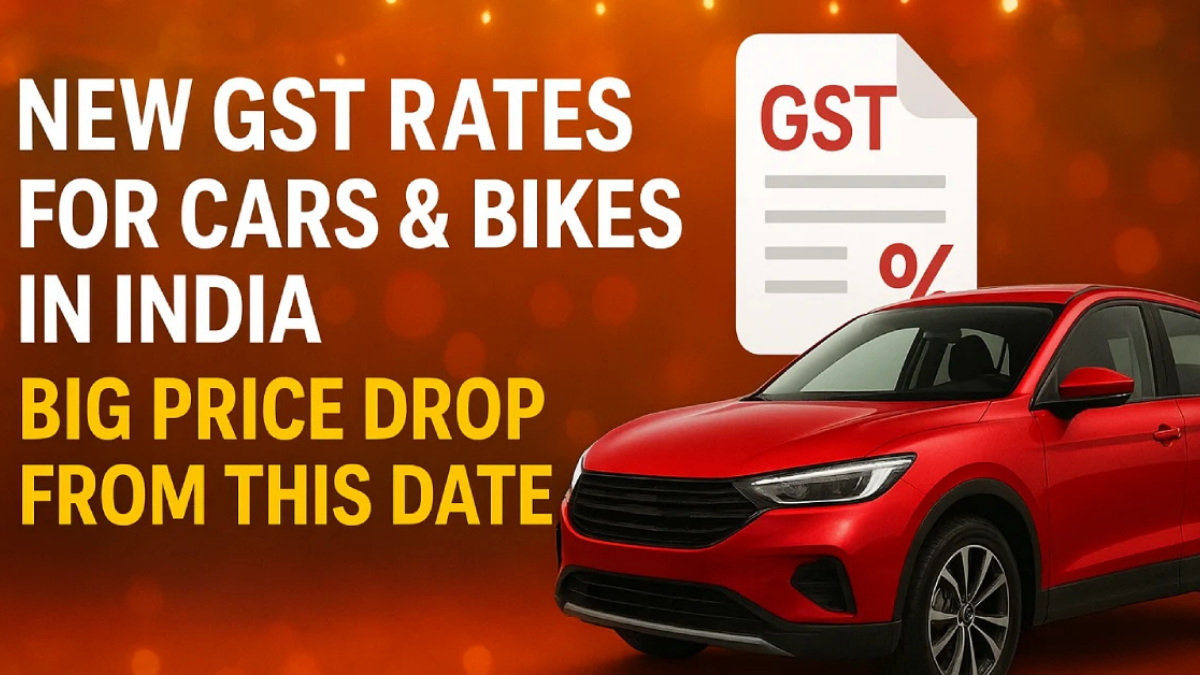
The Government of India has announced new GST cuts in September 2025, lowering taxes on small cars and 3-wheelers. The move is expected to make entry-level vehicles more affordable for first-time buyers and boost the auto industry.
Design: Affordable Mobility Gets a Push
India’s auto market has long depended on small cars and 3-wheelers as the backbone of affordable mobility. The GST reduction ensures that these vehicles remain accessible, especially for middle-class families and small business owners.
- For small cars, manufacturers will now be able to price models more competitively.
- For 3-wheelers, used heavily in urban transport and rural logistics, the price drop will directly benefit daily commuters and operators.
- The design segment—compact, fuel-efficient, and budget-friendly—will see more attention as automakers adjust their line-ups to align with the new tax benefits.
This marks a shift towards strengthening India’s affordable mobility ecosystem.
Performance: Encouraging Fuel Efficiency
While the GST cut does not directly change vehicle performance, it creates incentives for fuel-efficient models to reach a wider audience.
- Manufacturers may invest in refreshed variants with improved mileage to attract cost-conscious buyers.
- For 3-wheelers, CNG and electric options are expected to gain more traction as operators look for low running costs.
- Entry-level hatchbacks, already known for their city-friendly performance, will now become even more popular due to lower acquisition costs.
The policy indirectly supports sustainable and efficient transport choices.
Specs: Small Cars and 3-Wheelers in Focus
The vehicles most impacted by GST cuts include:
- Entry-level hatchbacks with engines under 1200cc.
- Compact sedans falling in the small car tax category.
- Passenger 3-wheelers widely used in urban and semi-urban transport.
- Cargo 3-wheelers serving last-mile delivery and rural trade.
Many of these models already offer:
- Affordable maintenance.
- Decent safety upgrades like airbags and ABS.
- Fuel-efficient petrol, CNG, or electric options.
By making these specs accessible at lower prices, the government aims to expand vehicle ownership and usage in underserved markets.
Price: What Buyers Can Expect
The GST cut translates into direct price reductions across eligible models.
- Small cars are expected to become cheaper by ₹15,000 to ₹30,000, depending on make and model.
- 3-wheelers could see prices drop by ₹10,000 to ₹25,000, making them more attractive to fleet operators.
This change is especially impactful for first-time buyers, who often face budget limitations. Lower upfront costs may also improve access to auto loans and financing options.
Market Impact: A Boost for Auto Sales
India’s auto industry has been under pressure from rising input costs and slowing demand in some segments. The GST cut is expected to revitalize sales.
- Higher Demand for Small Cars – Affordable hatchbacks and compact sedans will attract more buyers in tier-2 and tier-3 cities.
- Growth in Last-Mile Connectivity – Lower-priced 3-wheelers will encourage more adoption in logistics and shared mobility.
- Support for EV Adoption – Electric 3-wheelers, already popular, may see an additional boost with reduced prices.
- Stronger Rural Sales – Lower vehicle costs will appeal to rural buyers, where affordability is key.
Overall, the cut is a strategic move to strengthen India’s mass mobility sector.
Competitor Comparison: Impact on Brands
The GST cuts will reshape competition in the small car and 3-wheeler segments.
- Maruti Suzuki: Already dominant in the hatchback category, the company stands to benefit the most from higher demand.
- Tata Motors: With strong small car and 3-wheeler portfolios, it could gain rural and urban buyers alike.
- Hyundai: Its entry-level hatchbacks may now see improved traction against rivals.
- Bajaj Auto & Piaggio: As leaders in 3-wheelers, both are expected to witness a sharp increase in volumes.
This competitive shift will encourage manufacturers to refresh products and expand affordable line-ups.
Conclusion: Affordability at the Core of Mobility
The new GST cuts in India reaffirm the government’s commitment to making mobility affordable and accessible. By reducing the tax burden on small cars and 3-wheelers, the policy delivers relief to both buyers and manufacturers.
As a result, millions of families, commuters, and small businesses will benefit from lower ownership costs, helping the auto sector grow sustainably.
For India, where affordability drives demand, this move could be the spark that reignites the entry-level auto market in the coming years.