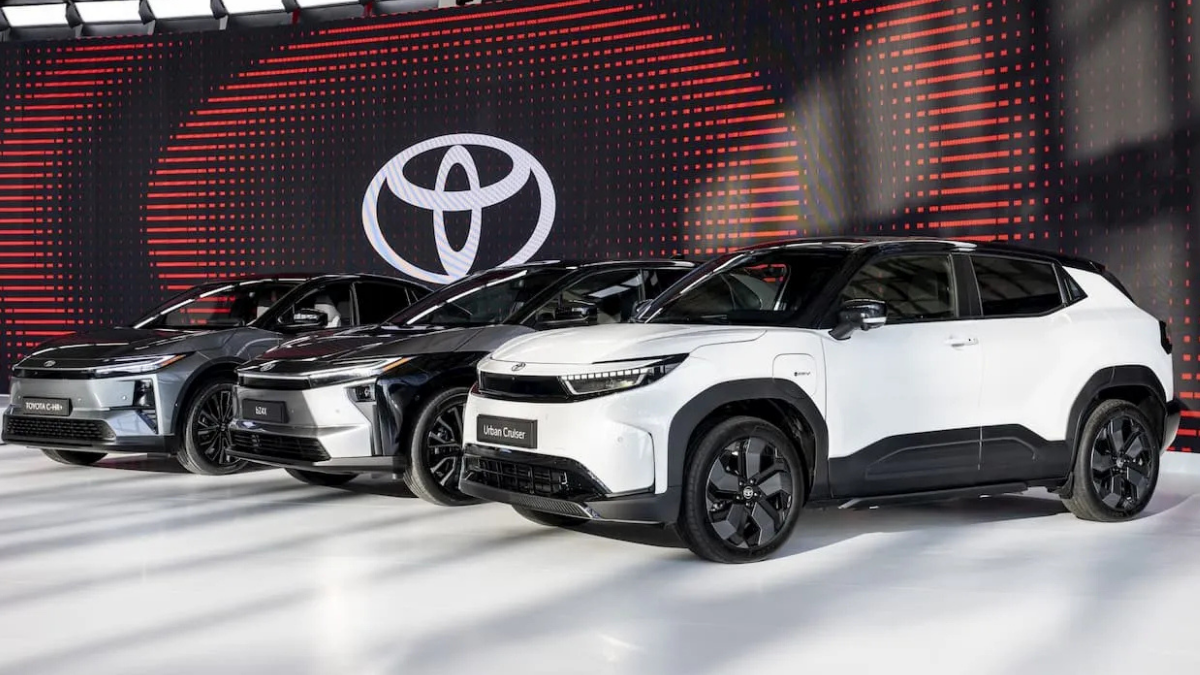
Toyota has confirmed a major expansion of its European EV program with nearly $800 million allocated in 2025. The investment will expand Czech Republic facilities to build next-generation electric vehicles with higher range and efficiency.
Design: Building a New Era of Toyota EVs
Toyota’s Czech Republic plant, located in Kolin, will undergo a significant transformation. The company has confirmed the expansion includes new assembly lines, advanced battery integration systems, and next-gen design platforms.
Unlike the brand’s earlier small-scale EV production, the upcoming facility will feature a dedicated EV-only architecture. Toyota says this will allow for:
- Flexible design across SUVs, sedans, and compact crossovers.
- Improved aerodynamics for efficiency.
- Lightweight structural materials to reduce battery strain.
The design upgrade reflects Toyota’s global strategy: shifting from hybrid leadership to direct EV competitiveness in Europe.
Performance: Toyota Targets Efficiency and Range
Performance is a key priority for Toyota’s expanded EV line. The $800M investment includes R&D for electric motors, battery thermal management, and software integration.
Toyota’s focus is on:
- Longer range (targeting 500–600 km on a single charge).
- Faster acceleration thanks to improved e-motors.
- Enhanced battery cooling to maintain consistency in both summer and winter climates.
By situating production in Central Europe, Toyota ensures vehicles are tailored for the region’s diverse driving conditions—from high-speed autobahns to urban congestion zones.
Specs: What to Expect from the New Models
While Toyota has not revealed exact model names, insiders suggest the Czech expansion will produce compact EVs and mid-size SUVs for Europe.
Key expected specifications include:
- Battery packs ranging from 60 kWh to 90 kWh.
- DC fast-charging up to 250 kW, giving 80% charge in under 25 minutes.
- Advanced driver-assist systems with Toyota Safety Sense EV package.
- Built-in software upgrade platform for future over-the-air updates.
The emphasis on scalability means Toyota can quickly adapt to future market needs, whether for affordable city EVs or higher-range family vehicles.
Price: Competitive EV Positioning in Europe
Pricing remains one of the biggest questions. Toyota has indicated that cost efficiency is a priority, suggesting starting prices around €35,000–€40,000 for base models.
By producing directly in the Czech Republic, Toyota avoids high import tariffs and logistics costs, allowing them to undercut some global rivals while staying competitive in Europe’s mid-tier EV market.
Market Impact: Strengthening Toyota’s EV Push
This $800M move marks one of Toyota’s largest European EV investments to date. The impact is expected to be significant:
- Boosting European Manufacturing – The Czech Republic plant expansion will create thousands of jobs and strengthen the region’s role in the EV transition.
- Expanding Consumer Choice – With local EV production, Toyota can offer European buyers more affordable electric cars with shorter delivery times.
- Supporting EU Climate Goals – The investment aligns with Europe’s 2035 target to phase out new petrol and diesel cars.
- Elevating Toyota’s EV Status – Known for hybrids, Toyota is now positioning itself as a serious EV contender against established rivals.
Competitor Comparison: Toyota vs European EV Leaders
In Europe, the EV market is dominated by Volkswagen, Hyundai, and Tesla. Toyota’s Czech expansion positions it strategically against these competitors.
- Volkswagen: Already producing EVs in Germany and Czech Republic (via Skoda), VW has strong brand presence. Toyota will now share production territory, offering buyers direct alternatives.
- Hyundai/Kia: Korean brands have earned praise for efficiency and affordability. Toyota’s new models will need to match their charging speeds and range.
- Tesla: With its Berlin Gigafactory, Tesla is a premium leader. Toyota is unlikely to beat Tesla in performance but may win on reliability, pricing, and service accessibility.
This competitive positioning shows Toyota is not just expanding capacity—it’s directly targeting Europe’s most contested EV battlegrounds.
Conclusion: Toyota’s $800M Bet on Europe’s EV Future
Toyota’s decision to invest nearly $800 million into expanding EV manufacturing in the Czech Republic highlights the company’s serious commitment to electrification.
By focusing on design flexibility, performance improvements, competitive pricing, and European-specific production, Toyota is ensuring that its EVs are not only relevant but also appealing to a wide range of buyers.
As the 2025–2030 decade unfolds, this expansion could mark the turning point where Toyota transitions from hybrid pioneer to a major EV competitor in Europe.